
What Would I Even Post?
how I slowly learned to build in public (and how you can too)

My old boss used to tell me: you should build in public.
I respected her, and she was right - but I was SO. confused.
Everything I was doing was detailed day-to-day minutiae. What did she want me to share? “Today I still can’t get stakeholders to agree”? Why would I post that on LinkedIn?
I didn’t really understand the value - do it for my own personal brand?
Here’s what I understand now, years later: it’s about building an audience for the product before you launch. (And IMHO, you’re always launching.)
It’s about validating ideas. It’s about enthusiasm instead of crickets. It’s about building champions - about posting “hey, I need beta testers” and being able to schedule ten amazing, filling-my-cup calls with people I’m loving talking to.
I’ll show you how I got here. Let’s go.
first, I thought I was doing it
By starting a Substack, I thought I was doing the thing!
I did what I see people do on Twitter: “Day 38 of building this app, and we finally have a paywall. LFG.”
This style clearly works on Twitter. I still see it working on Twitter! And I had to start somewhere - but it wasn’t working.
When I started working on Magpie I did post “I’m working on something!!” but saved the substance for a big reveal. I didn’t want to commit to anything substantial, god forbid people might be interested and then I’d be on the hook to do it.
PocketHog was a real step forward - I posted on Reddit as I was building, went back and forth in the comments, validated the idea, got feedback. Some of the people from that thread ended up in my TestFlight beta.
One Reddit post and a few honest comment threads is a genuine win.
And still: when PocketHog launched properly - real announcement, real app, live on the App Store - it got seven likes.
I even knew what was wrong while it was happening. I wrote a whole piece about how PocketHog was built to avoid marketing the other apps.
By May, I had the theory down. I philosophically understood building in public - I’d seen people do it, I knew what it was about, the water was getting warmer.
What finally worked was a crazy shower idea - a 30 day challenge. Share one idea, every day. Honestly, I was thinking about having fun with y’all in notes and comments, not “building in public.”
By Day 2, I hit the wall I’d been avoiding: “do I still share something I don’t love, yet? I didn’t really think about how sharing 30 ideas in 30 days would push me to show up half baked, imperfect. Walked right into that one 😬”
And Katie Buzas, Tess Taylor, Alyssa Fu Ward, PhD, and Tiffany Soroko showed up to cheer it on. 🥹
The daily reps opened up my whole sense of what could be shareable; I needed to find something every day, so I was searching for content everywhere.
#everythingiscontent
I wanted to write article because in the last few weeks, people have said kind things like “you’re the OG of building in public” and - no!! I just found a wrapper and routine that enabled me.
The consistency. The challenge of it. Starting from zero, publicly. The structure of the format: this is day 20 of 30. The wrapper is what made it possible for me to show up - not a personality trait I have.
In fact, it was the medicine - the permission - for the personality traits that would have stopped me 😆
Of course, inside the wrapper, I was intentional; I tagged people on purpose, hung out in the comments, learning what people were curious about and what I might follow up on the next day.
(TBH, Orbit helped me remember who to talk to about what along the way - which might be the most honest pitch for it I have?)
if you’re where I was
I’m not going to end this with tips, because “share a small screenshot every day! ✨” is literally what I was doing with Magpie, and it didn’t work.
I found a way that works for me. You have to find the way that works for you.
You don’t need to have it - the newsletter, the app, the offer - figured out; in fact, it’s off-putting when people have it all figured out. (I can see this in the data now, mine and my beta testers when they screen share: the posts that pull new people in are almost never the polished ones.)
They’re the vulnerable, personal ones laid over something real - a system, a build, the research. Raw plus receipts.
No matter what you’re building, the elements of “build in public” are similar.
You have to feel comfortable, in a room where there’s trust. (might I recommend Substack?)
You need a framework for what and when to post, so you’re on the hunt for content, but posting is easy
You have to have something you genuinely want to talk to people about.
I wrote this in my April quarterly goals - don’t look surprised - back when I could explain it, but couldn’t do it:
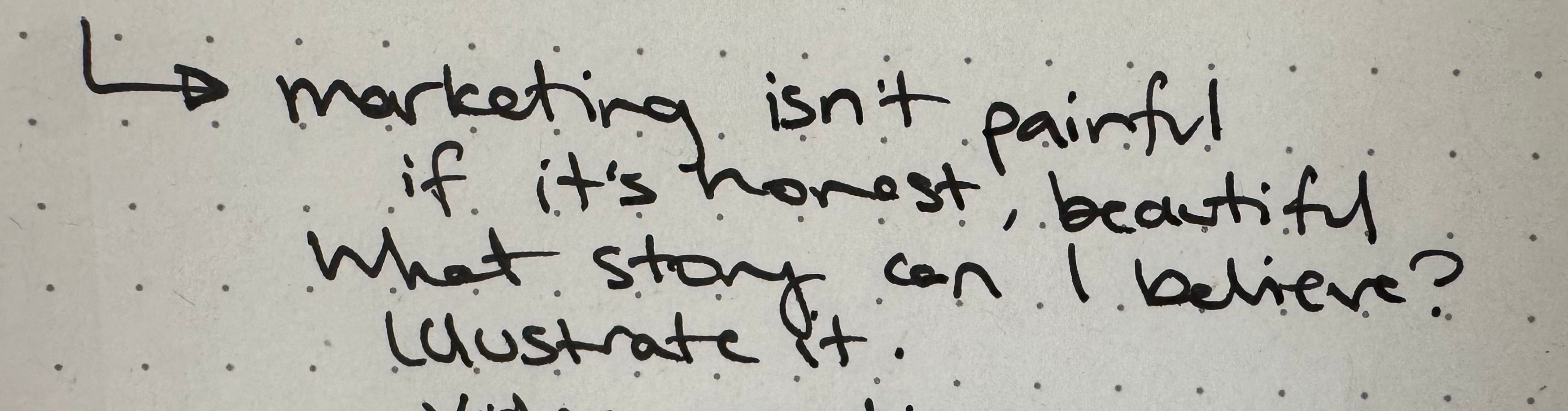
Two years ago, I left a 1:1 with my boss confused - what would I even post?
And here I am, in June:
a bonus surprise: I liked it?
One more thing, because it just happened and I’m still processing it.
The 30 days led to something I didn’t plan for: beta calls. Real conversations with real people about the thing I’d been building in front of them. Committing to calls was hard - I’m already building in the margins, when am I reliably free, 9PM?!
But talking to all of you? It gave me SO much energy. So many ideas! Every call, I came away thinking differently - about the product, about the people using it.
Building in public got me the room. The room got me the conversations. The conversations are now shaping what I build next - I don’t know yet what it all means for the product itself. But I know none of it would have happened if I’d kept holding everything back for the reveal.
We’ll see. I’m still in it.
(and you could be too - the beta is still open! comment or DM me.)
Hey Rebecca, stopping by because it has been awhile since I commented on anything of yours. I'm so glad that you talked about what wasn't working in your earlier content. Because in writing this piece, you diagnosed exactly what wasn't working ... keeping the actual product a bit of a secret before it's official launch.
I remember commenting on one of your Notes a few months ago. In your Note, you asked several questions of Substackers, including whether or not others worry or care as much about saving everything that might be helpful for future content creation/writing (forgive me, I can't remember the exact phrasing and it may have been more than one Note). I know that whatever I said was probably not super helpful for your product iteration process. But I jumped in because I always want you to be successful in whatever you do. It's hard to find your way if you feel you are writing or speaking into a void.
That said, I can see how much you have improved with writing about your process since the beginning of the year. In earlier pieces, I was so confused about Magpie and what it would offer to me. Whereas with your writing about Orbit, I understood (mostly) exactly what you were trying to do every step of the way. It just goes to show that writing consistently brings that clarity not only to you, but also to your audience.
I know you've said before that you don't think you're a real writer. Don't sell yourself short. I think you're an excellent and real writer. Not only because you're here on Substack regularly, but because you're also bringing all of your readers along for the ride.
Love reading the history behind this creation. And I loved being a part of it even more! You are a rockstar 🎉